Menu

PVC Roof Installation in Hattiesburg – Minimize Downtime with Industrial-Grade Membrane Systems

We install single-ply PVC roofing systems engineered for the Gulf Coast climate, delivering watertight protection for commercial properties across Hattiesburg with minimal disruption to your operations.

Slider Image 1
Slider Image 2
Slider Image 3
Slider Image 4
Slider Image 5
Slider Image 7
Slider Image 8
Slider Image 9
Slider Image 10
Slider Image 11

Why Commercial Buildings in Hattiesburg Need PVC Membrane Roofing

Your commercial roof endures punishing conditions in South Mississippi. The combination of high humidity, intense summer heat, and afternoon thunderstorms common to Hattiesburg creates a hostile environment for traditional roofing materials. Flat and low-slope commercial roofs trap standing water after storms, accelerating membrane degradation and creating leak paths that threaten inventory, equipment, and business continuity.

PVC roof installation offers a solution engineered for these exact challenges. Polyvinyl chloride membrane systems resist moisture intrusion better than modified bitumen or EPDM alternatives. The heat-welded seams create a monolithic barrier that stands up to the thermal cycling between air-conditioned interiors and 95-degree exterior temperatures typical of Hattiesburg summers.

Commercial PVC roofing services address the specific vulnerabilities of warehouse districts near the Leaf River and retail centers along Highway 49. Standing water evaporates slowly in humid conditions, and organic growth takes hold quickly. PVC membrane installation eliminates the porous seams where algae and mold typically establish footholds.

Single-ply PVC installation reduces the load on your existing structure compared to built-up roofing systems. This matters for older commercial buildings in the Downtown Historic District, where structural capacity may limit your options. The reflective white surface reduces cooling costs, a significant factor when your HVAC system runs from April through October.

PVC flat roof installation protects your operation from the financial impact of water damage and the operational chaos of emergency repairs during peak business periods.

Why Commercial Buildings in Hattiesburg Need PVC Membrane Roofing
Our Commercial PVC Installation Process

Our Commercial PVC Installation Process

We execute commercial PVC roofing services with a focus on watertight performance and schedule adherence. The process begins with a structural deck assessment to identify any compromised substrate that could telegraph through the new membrane. We measure moisture content in existing insulation layers using infrared scanning technology, isolating wet sections that require replacement before membrane installation.

Proper substrate preparation determines long-term performance. We install a cover board over the insulation layer to provide puncture resistance and create a smooth surface for the PVC membrane. This step prevents fastener back-out and protects the membrane from foot traffic during maintenance activities.

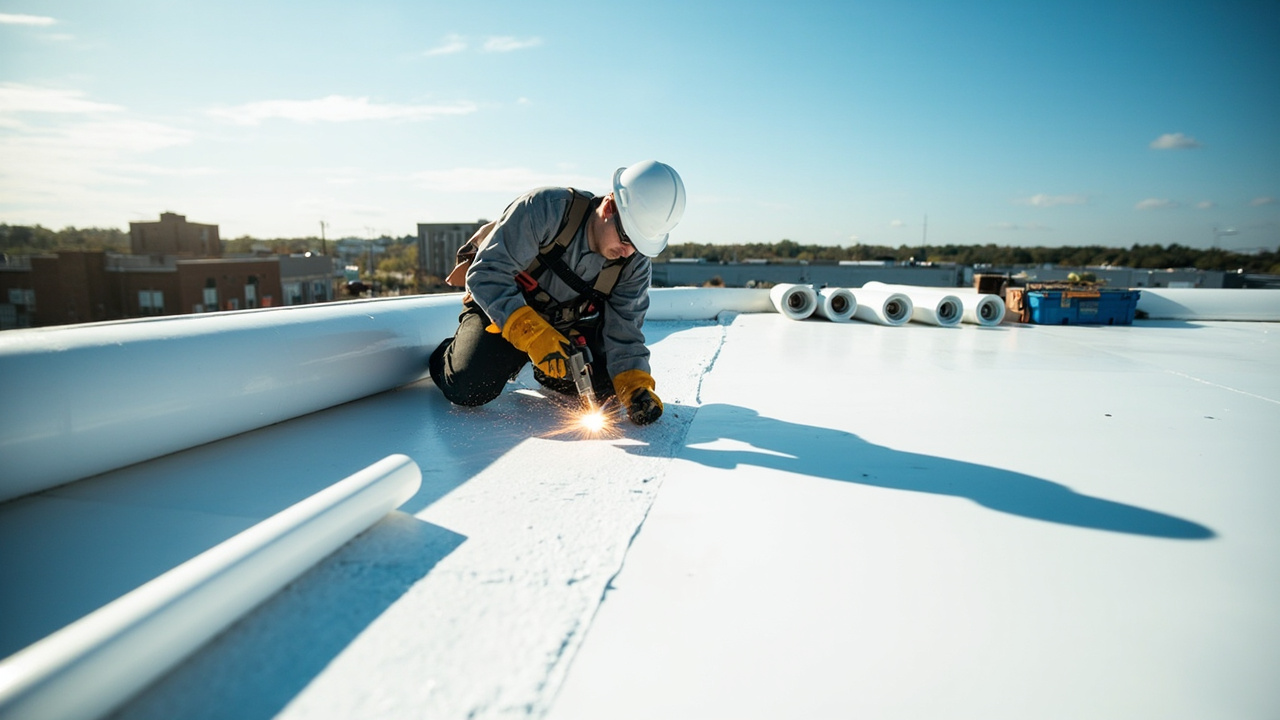
The PVC membrane itself arrives in rolls that we position and mechanically fasten to the substrate. We use hot air welding equipment to fuse the seams, creating bonds stronger than the membrane material itself. A technician tests every seam with a probe to verify complete fusion. This level of quality control separates professional installations from failures that appear within the first year.

Flashing details around rooftop units, parapet walls, and penetrations receive custom fabrication. We form inside and outside corners from the same PVC material, heat-welding these transitions to create continuity across the entire roof plane. Termination bars secure the membrane at vertical transitions, sealed with compatible polyurethane sealant.

We coordinate installation during off-hours or in phases to maintain your operations. A warehouse facility can remain functional while we complete one section at a time. Our crews stage materials to avoid blocking loading docks or customer access points. The schedule flexibility and site management separate us from contractors who approach every project with the same rigid methodology.

What Happens During Your Commercial Roof Installation

PVC Roof Installation in Hattiesburg – Minimize Downtime with Industrial-Grade Membrane Systems
01

Structural Assessment and Planning

We survey your existing roof to identify structural limitations, drainage inadequacies, and wet insulation. Core samples reveal the condition of underlying layers. We measure the building to calculate material requirements and identify equipment access routes. You receive a detailed scope of work that outlines the installation sequence, identifies potential complications, and establishes a realistic completion timeline based on your operational requirements and weather windows.
02

Membrane Installation and Welding

Crews position PVC membrane sheets across the prepared substrate, overlapping edges by six inches. Hot air welding equipment heats both membrane surfaces simultaneously, fusing them under pressure from a silicone roller. A quality control technician follows behind, testing seam strength and verifying complete fusion. We document every welded seam for your records. Penetrations receive custom flashing fabricated on-site. The systematic approach ensures consistent quality across the entire roof plane regardless of size or complexity.
03

Final Inspection and Handover

We walk the completed roof with you, explaining maintenance requirements and identifying equipment access paths that minimize membrane wear. You receive comprehensive documentation including seam test results, material certifications, and a maintenance guide specific to PVC roofing systems. We mark all penetrations and explain proper procedures for future rooftop equipment installation. The final inspection confirms proper drainage, secure terminations, and complete seam fusion. Your facility returns to normal operations with a roof system engineered for decades of service.

Why Hattiesburg Businesses Choose Our PVC Roofing Team

Commercial roofing in South Mississippi requires familiarity with local building department requirements and the climatic realities of the Pine Belt region. We understand the wind load calculations necessary for compliance with Mississippi amendments to the International Building Code. Our installations meet the enhanced fastening schedules required in this wind zone without over-engineering the attachment pattern.

Experience with Hattiesburg's commercial building stock informs our approach. We have installed PVC membrane systems on distribution centers in the industrial corridor west of I-59, retail developments along Highway 98, and medical facilities near Forrest General Hospital. Each building type presents unique challenges related to rooftop equipment density, structural capacity, and operational scheduling constraints.

The local climate demands specific installation techniques. High humidity affects adhesive cure times and requires careful moisture management during tear-off procedures. Afternoon thunderstorms can develop quickly during summer months, and we monitor weather radar continuously during installation to protect your building interior. Our crews understand when to pause work and secure the roof plane rather than risk water intrusion.

We maintain relationships with local suppliers, which translates to faster material delivery and better pricing than out-of-town contractors who ship everything from distant warehouses. When a project requires additional materials or a design modification, we source what you need within hours rather than days.

Your business depends on uninterrupted operations. We schedule installations around your peak periods, work in phases to maintain facility access, and communicate constantly about project status. The combination of technical expertise and operational awareness keeps your building protected without disrupting the activities that generate your revenue.

What to Expect from Your PVC Roof Installation Project

Project Timeline and Schedule Coordination

Most commercial PVC roof installations require one to three weeks depending on building size and complexity. We phase the work to maintain your operations, completing sections while others remain functional. Weather delays occur, and we communicate schedule impacts immediately. You receive a detailed timeline during the planning phase with clear milestones for material delivery, tear-off completion, and final inspection. We coordinate with your facility manager to minimize disruption during critical business periods. Off-hours installation is available for facilities that cannot accommodate daytime construction activity.

Pre-Installation Assessment Process

The assessment begins with a physical roof inspection to evaluate structural capacity, drainage performance, and existing membrane condition. We use infrared scanning to identify wet insulation that requires replacement. Core samples reveal the composition and condition of underlying roof layers. You receive a written report documenting our findings, material recommendations, and a detailed scope of work. We identify code compliance requirements specific to your building location and use classification. The assessment reveals accurate project costs and eliminates surprises during installation. You make decisions based on complete information rather than rough estimates.

Installation Quality and Performance Standards

Every seam receives testing to verify complete fusion. We document installation procedures with photographs that become part of your building records. The completed roof system meets manufacturer specifications for material compatibility, fastener density, and seam overlap. Flashing details receive particular attention because these transitions represent the most common failure points in commercial roofing systems. We install the system to achieve the specified wind uplift rating required by code for your location and building height. The result is a monolithic membrane system that protects your facility from water intrusion and stands up to the demands of the Gulf Coast climate.

Post-Installation Support and Maintenance

We provide comprehensive documentation including material certifications, seam test results, and maintenance recommendations specific to PVC roofing systems. You receive guidance on proper cleaning procedures, equipment installation protocols, and drainage maintenance. We explain how to identify minor issues before they become major problems. Scheduled maintenance extends membrane service life and protects your investment. Our team remains available for questions about roof performance, HVAC equipment installation, or repairs needed after storm events. The relationship continues beyond project completion because we understand that commercial roofs require ongoing attention to deliver decades of reliable performance.

Frequently Asked Questions

You Have Questions,
We Have Answers

What goes under PVC roofing? +

PVC roofing requires a solid substrate, typically ISO board insulation or polyiso foam, installed over the roof deck. This insulation layer provides thermal performance and creates a stable base for the membrane. Below that sits the structural deck, usually plywood or metal. You need a cover board between the insulation and PVC membrane to protect against punctures and foot traffic. Some installations include a vapor barrier at deck level to prevent moisture migration. The entire assembly gets mechanically fastened or fully adhered, depending on wind uplift requirements and building codes.

What are the issues with PVC roofing? +

PVC roofing faces three main problems. Seam failure occurs when heat welding is rushed or done in cold weather, creating weak points where leaks develop. Plasticizer migration happens over time as the chemicals that keep PVC flexible leach out, making the membrane brittle and prone to cracking. Ponding water accelerates degradation because standing water breaks down the material faster than proper drainage allows. Shrinkage can pull seams apart during temperature swings. Poor installation causes most issues, not the material itself. Choose experienced contractors who understand proper membrane handling and seam welding techniques.

How much does it cost to install a PVC roof? +

PVC roof installation costs depend on roof size, access difficulty, insulation needs, and removal requirements. You pay for materials, labor, tear-off disposal, and any deck repairs discovered during installation. Larger roofs cost less per square foot than small projects because mobilization costs spread over more area. Complex roof geometry with multiple penetrations, parapet walls, or skylights increases labor time. Expect costs to rise if your building needs structural reinforcement or upgraded insulation to meet current energy codes. Request itemized estimates from three contractors to compare value, not just bottom-line numbers.

How long will a PVC roof last? +

A properly installed PVC roof lasts 20 to 30 years in most climates. Longevity depends on membrane thickness, installation quality, maintenance frequency, and environmental exposure. Roofs in areas with extreme temperature swings or high UV exposure age faster than moderate climates. Regular inspections catch small problems before they become expensive failures. Cleaning drains, removing debris, and addressing ponding water extend service life. Thicker membranes, typically 60 mil or 80 mil, outlast thinner 45 mil products. Chemical exposure from nearby industrial facilities can reduce lifespan. Quality installation matters more than membrane brand.

Can you walk on PVC roofing? +

Yes, you can walk on PVC roofing without damaging it if you take precautions. The membrane handles foot traffic better than many single-ply systems. Walk on seams and avoid dragging tools or sharp objects across the surface. Wear soft-soled shoes, never boots with aggressive treads or metal cleats. Hot weather makes PVC softer and more vulnerable to punctures. Use walkway pads for frequent access areas like HVAC equipment zones. Inspect for damage after any rooftop work. The cover board beneath the membrane provides critical puncture resistance, so installations without it require extra care.

Is 15 lbs or 30 lbs felt paper better for roofing? +

This question does not apply to PVC roofing systems. Felt paper, whether 15 lb or 30 lb, gets used under asphalt shingles on sloped residential roofs as a water-resistant underlayment. PVC is a commercial flat roofing membrane that requires completely different substrate materials. You install PVC over rigid insulation and cover board, not felt paper. The two systems serve different building types and roof slopes. If you are considering PVC for a low-slope commercial roof, focus on proper insulation and cover board specifications instead of shingle underlayment products.

Is PVC roofing better than shingles? +

PVC and shingles serve different roof types. PVC works on low-slope commercial and flat roofs where shingles cannot function because they need slope for water drainage. Shingles work on steep residential roofs. PVC offers superior waterproofing for flat applications, resists ponding water, and provides a single continuous membrane. Shingles cost less upfront for sloped roofs and offer traditional aesthetics. You cannot choose between them based on preference alone. Your roof slope, building type, and local code requirements determine which system works. Most commercial buildings require PVC or similar membranes, not shingles.

What is the life expectancy of a PVC ceiling? +

PVC ceiling panels and PVC roofing membranes are different products with different lifespans. Interior PVC ceiling panels last 15 to 25 years depending on humidity exposure and cleaning frequency. They resist moisture and mold, making them popular in bathrooms and kitchens. However, PVC roofing membranes exposed to UV radiation, weather, and temperature extremes last 20 to 30 years. If you are asking about roofing specifically, focus on membrane lifespan, not interior ceiling products. The two materials share chemistry but face completely different environmental stresses that affect durability and replacement timing.

What are the drawbacks of PVC? +

PVC drawbacks include higher upfront material costs compared to TPO or EPDM rubber roofing. Installation requires skilled labor because proper heat welding demands experience and precise temperature control. Cold weather complicates installation as the membrane becomes stiff and difficult to handle. Shrinkage occurs during temperature swings, stressing seams if not properly detailed. Plasticizers migrate out over time, reducing flexibility in older membranes. Chemical exposure from grease or certain solvents can damage the surface. Despite these issues, PVC remains popular because benefits like weld strength, reflectivity, and puncture resistance outweigh the drawbacks for many commercial applications.

What is the 25% rule for roofing? +

The 25% rule states that if more than 25% of your roof needs repair or replacement within a 12-month period, building codes may require you to bring the entire roof up to current code standards. This triggers requirements for upgraded insulation, improved drainage, and possibly structural reinforcement. The rule prevents piecemeal fixes on failing roofs that never meet modern energy and safety standards. It affects commercial buildings more than residential properties. Check local code enforcement because some jurisdictions use different thresholds or exemptions. This rule can turn a small repair into a full replacement project.

How Hattiesburg's Humidity and Storm Patterns Impact Commercial PVC Roofing Performance

South Mississippi averages over 57 inches of annual rainfall, with intense afternoon thunderstorms common from May through September. Commercial buildings in Hattiesburg face extended periods of high humidity that keep roof surfaces damp, creating conditions where organic growth establishes quickly on porous roofing materials. PVC membrane installation addresses this challenge directly. The non-porous surface sheds water efficiently and resists the algae growth that degrades other single-ply materials. The heat-welded seams eliminate the mechanical fasteners and tape-sealed edges where moisture typically penetrates. For warehouses near the Bouie River or retail centers in areas with poor drainage, this moisture resistance prevents the gradual degradation that leads to premature roof failure.

Commercial roofing in Forrest County requires compliance with wind load requirements that reflect the region's hurricane exposure. Our team works directly with local building inspectors who understand the specific code amendments that apply to commercial structures in Hattiesburg. We calculate fastener density based on your building height, roof geometry, and distance from the coast. The local knowledge extends to material sourcing and installation scheduling around weather patterns. Contractors from outside the region underestimate how quickly afternoon storms develop during summer months or fail to account for the humidity's impact on adhesive performance. We install PVC roofing systems year-round because we understand the techniques required for successful installation in Gulf Coast conditions.

Where To Find Us

Elite Roofing Hattiesburg provides trusted, high-quality roofing services for homes and businesses across South Mississippi. We specialize in roof repair, replacement, and inspections using top-grade materials and skilled workmanship. Our local team delivers honest advice, fair pricing, and lasting results—protecting what matters most, your home.

Address:
Elite Roofing Hattiesburg, 7 Professional Pkwy, Hattiesburg, MS, 39402

Additional Services We Offer

Our news updates

Latest Articles & News from The Blogs

Lorem ipsum dolor sit amet. Aut expedita quaerat quo eligendi numquam et laudantium perspiciatis qui minima expedita rem consequatur ducimus.…

Test Blog 4

Lorem ipsum dolor sit amet. Aut expedita quaerat quo eligendi numquam et laudantium perspiciatis qui minima expedita rem consequatur ducimus.…

Test Blog 3

Lorem ipsum dolor sit amet. Aut expedita quaerat quo eligendi numquam et laudantium perspiciatis qui minima expedita rem consequatur ducimus.…

Test Blog 2

Lorem ipsum dolor sit amet. Aut expedita quaerat quo eligendi numquam et laudantium perspiciatis qui minima expedita rem consequatur ducimus.…